
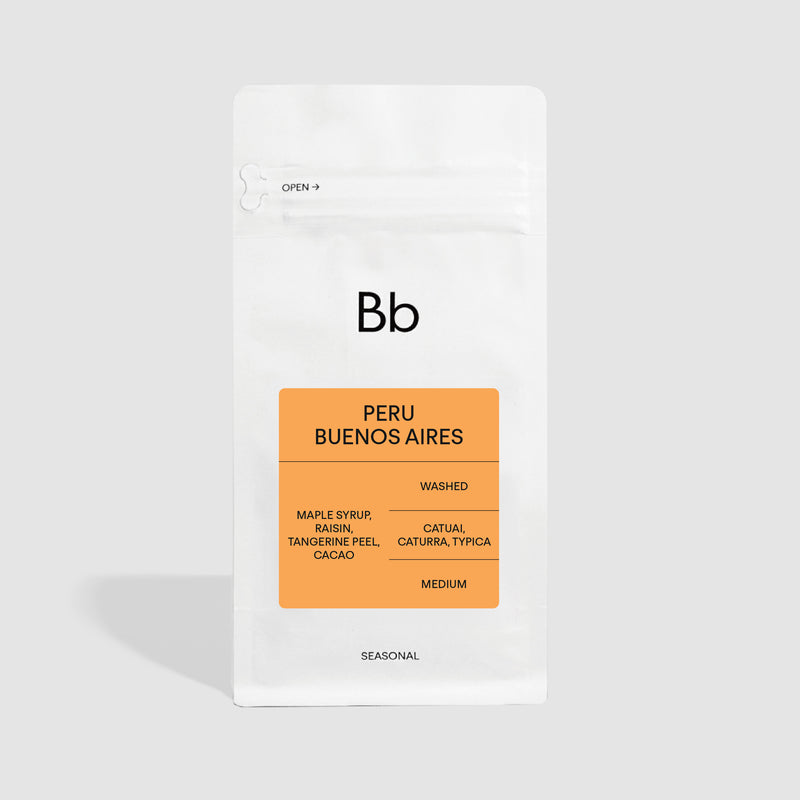
Seasonal Blend

Peru Buenos Aires

RM 105.00

The sweetness of maple syrup, the sweetness of raisins, the richness of chocolate

Free shipping on orders above RM80. Ships within 1–3 business days.
Fact Sheet

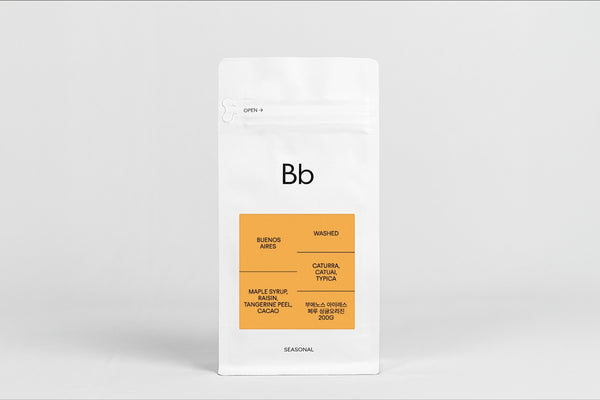
FACT SHEET

Tasting Notes: Maple syrup, raisins, tangerine peel, cacao

Roasting: Medium

Processing Method: Washed

Breeds: Caturra, Catuai, Typica

Cultivation altitude: 2,250~2,400m

Region: Sayake, Cajamarca

Processing Plant: Buenos Aires

Producers: Local small farmers

Peru Buenos Aires

MAPLE SYRUP, RAISINS, TANGERINE PEEL, CACAO

Do you like Peruvian coffee? While fans of the region's origin seem rare, you will be surprised by the quality, which is quite different from the Peruvian coffees you have tasted before. First, the intensity of the sweetness is tremendous. The clove-like aroma and smooth texture bring to mind maple syrup. The subtle fruit notes feel a tone calmer, resembling the peel of a tangerine rather than its flesh. The concentrated sweetness of raisins and the aroma of cacao nibs layer upon each other, leaving a complex impression.

If it is an evening at the end of the day when you want to let go of your worries for a moment, or a time to open a favorite book under a cozy blanket, this cup would be perfect. Its rich and dense sweetness will make that moment a little warmer.

Peru Buenos Aires

THE CHALLENGE OF GOING FROM A PEA GROWING REGION TO A COFFEE PRODUCING REGION

Peru is the world's largest exporter of organic Arabica coffee. With a wide variety of fair trade and organic certified coffees, it is highly regarded by coffee enthusiasts who value ethical consumption.

Buenos Aires is a village located in Cajamarca. Originally, local farmers cultivated alpine crops such as peas and corn, but climate change and the introduction of technology enabled them to grow coffee. This was achieved by transplanting seedlings, grown in bio-gardens to fully adapt to the local environment, into the farmland. It remains a production site that demonstrates the region's new potential by continuously developing cultivation methods.